Is Your Consent Application Up to Date with Compliance Pathway Changes?
- July 30, 2026
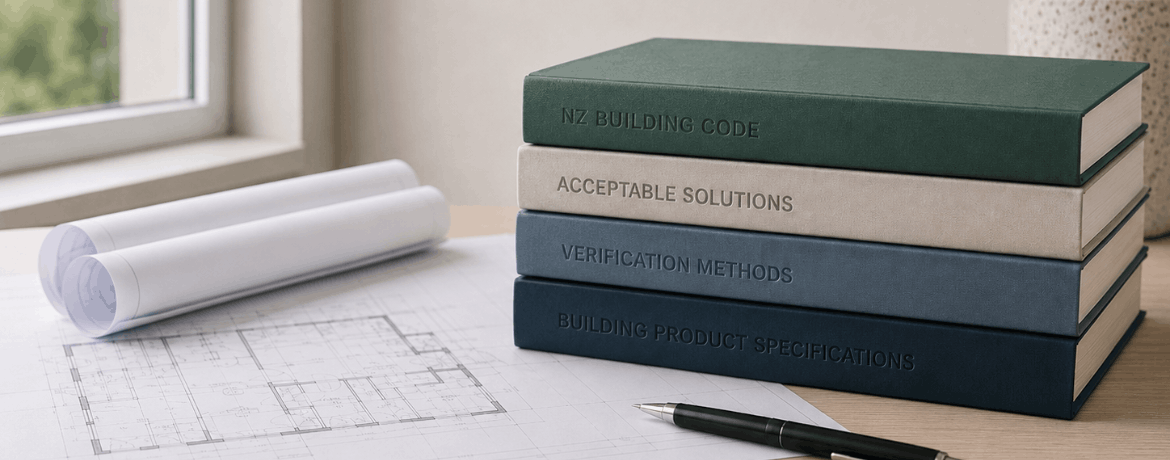
From 31 July 2026, building consent applications will need to reference the current editions of the relevant Acceptable Solutions, Verification Methods and the new Building Product Specifications.
For projects being designed now but lodged after this date, it is important that the design team checks the compliance pathway early and updates all supporting documentation before submission.
What is changing?
Depending on the scope of the project, the following updated compliance documents may apply:
B1 Structure
-
- B1/AS1 Second Edition
- B1/AS3 Second Edition
- B1/VM1 Second Edition
- B1/VM2 Second Edition, formerly B1/VM4
B2 Durability
-
- B2/AS1 Third Edition
- B2/VM1 Third Edition
C Protection from Fire
-
- C/AS1 Second Edition Amendment 1
- C/AS2 Second Edition
- C/VM2 Second Edition
E2 External Moisture
-
- E2/AS1 Fourth Edition
- E2/AS2 Fourth Edition
- E2/AS3 Fourth Edition
- E2/VM1 Fourth Edition
G4 Ventilation
-
- G4/AS1 Fifth Edition
- G4/VM1 Fifth Edition
H1 Energy Efficiency
-
- H1/VM3 First Edition Amendment 1
Building Product Specifications
The updated compliance documents also reference the new Building Product Specifications, which bring together relevant product standards and technical specifications.
Not every update will apply to every project. For some design stages, the main changes may relate only to B1 Structure, B2 Durability and E2 External Moisture. The key is to identify the applicable compliance pathways and document them consistently.
What should design teams be checking?
Before lodging an application, the full document package should be reviewed, including:
-
- drawings;
- specifications;
- structural and other design calculations;
- design features reports;
- producer statements; and
- supporting technical documentation.
The documents must:
-
- reference the correct editions of all applicable compliance documents;
- account for any revised paragraph, table and figure numbering;
- specify products and materials consistently with the Building Product Specifications; and
- remain fully coordinated across all design disciplines.
Watch out for mixed editions
A common issue during transition periods is the use of different editions across the consent package.
For example, the architectural drawings may reference a current Acceptable Solution while the specification, calculations or producer statements still refer to a previous edition. These inconsistencies can create uncertainty around the intended compliance pathway and may lead to requests for further information.
Early coordination between the architect, engineers; and other consultants will help avoid these issues.
H1 has a different transition date
The transition period for H1/AS1, H1/AS2, H1/VM1 and H1/VM2 ends on 26 November 2026.
This means the design team should confirm which H1 editions will be relied upon for each application and ensure the selected editions are consistently referenced throughout the drawings, specifications, calculations and reports.
Key takeaway
For applications lodged after 31 July 2026, do not assume that documentation prepared under earlier editions can be submitted unchanged.
A coordinated review before lodgement will help:
-
- reduce inconsistencies;
- minimise potential requests for further information;
- avoid delays during consent processing; and
- provide a clear and well-supported compliance pathway.
Preparing early will make the transition smoother for both the design team and the building consent authority.